

How to deliver medicine to relatives in the EU: instructions from GlobalPost
Caring for loved ones who live thousands of kilometers away is a special challenge — especially when it comes to health. The situation where the necessary medicines are available in Ukraine, but the person who needs them is in Germany, Poland, or Italy, is familiar to many. And the first question that arises is: “Can I somehow send them?”
At GlobalPost, we deal with such requests every day and can confidently say: yes, you can. But under certain conditions. Shipping medicines comes with a number of restrictions, as this category of goods is regulated by both Ukrainian and European legislation. In this article, we explain in detail how to send medicines to the EU — quickly, safely, and without unnecessary risks.
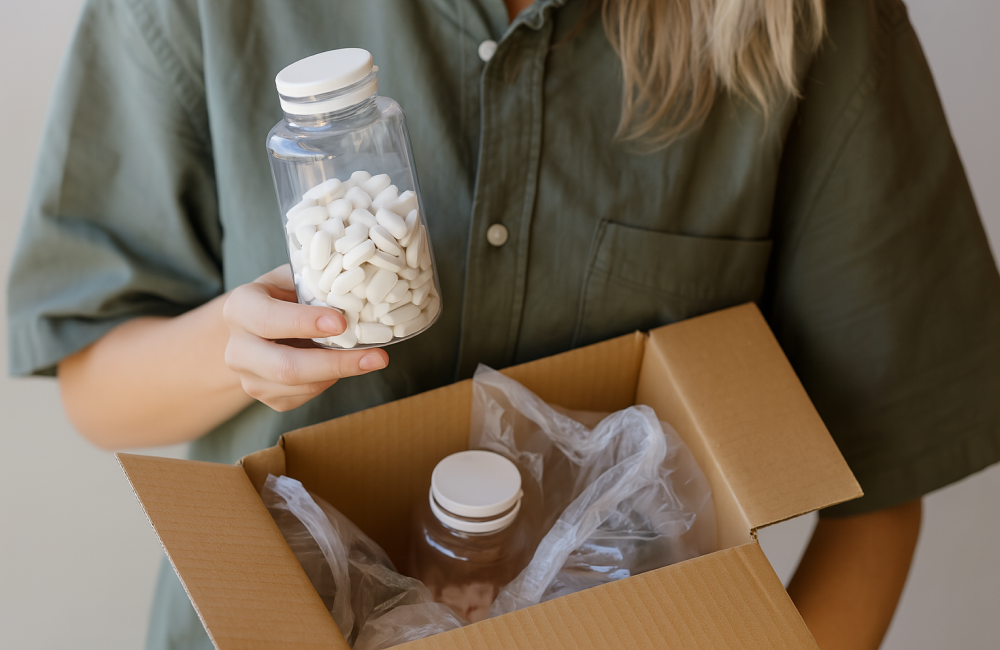
General Rules: What You Need to Know Before Shipping
Before putting together a parcel with medicines, you should consider a few key restrictions:
- For personal use only. Medicines must be intended for a specific recipient — not for resale or transfer to third parties.
- Limited quantity. You are allowed to send medications for a treatment period weighing up to 2 kg and up to 5 types of medicines per parcel. Large quantities may raise suspicion of commercial use.
- Factory packaging. Medicines must be in their original packaging with an instruction leaflet. Loose pills or unmarked ampoules are prohibited.
- From a private individual to a private individual. The shipment must be non-commercial.
How to Properly Prepare a Parcel with Medicines
To ensure the medicines pass customs without issues and reach the recipient, it’s important to prepare documents correctly, pack the shipment securely, and complete the declaration. At GlobalPost, we guide our clients through each of these steps. Below is a basic algorithm on how to proceed.
1. Prepare the documents
- Pharmacy receipt. Confirms legal purchase of the medicines and indicates their value for the customs declaration.
Note: We do not accept prescription medications, so a doctor’s prescription is not required and does not justify including such medicines in the parcel.
2. Pack the medicines responsibly
- Do not remove medicines from their original factory packaging;
- Include an instruction leaflet for each medicine;
- Use a sturdy outer box and secure the contents to prevent damage during transport. If needed, we’ll provide a box for free and pack everything securely for you.
3. Shipping with GlobalPost: Your Trusted Partner for Important Deliveries
- We check your documents before shipping;
- We complete the customs declaration ourselves according to EU requirements — you don’t need to fill out anything;
- We cooperate with international partner DPD, who delivers the parcel to the door or the nearest pickup point;
- We provide full tracking along the entire route;
- If needed — we consult both the sender and the recipient.
Still have doubts? Contact us — we’ll advise you whether a specific medicine can be shipped to the recipient’s country, explain customs requirements, and prepare all the necessary documents. You can find more information about the service and how to place an order here.
How Much Does Shipping Cost?
To calculate the cost of shipping medicines to the EU, use the calculator on our GlobalPost website: select the country, parcel weight, and shipping type — and you’ll immediately see available delivery options, estimated delivery times, and approximate prices. Here’s what the calculator output looks like:
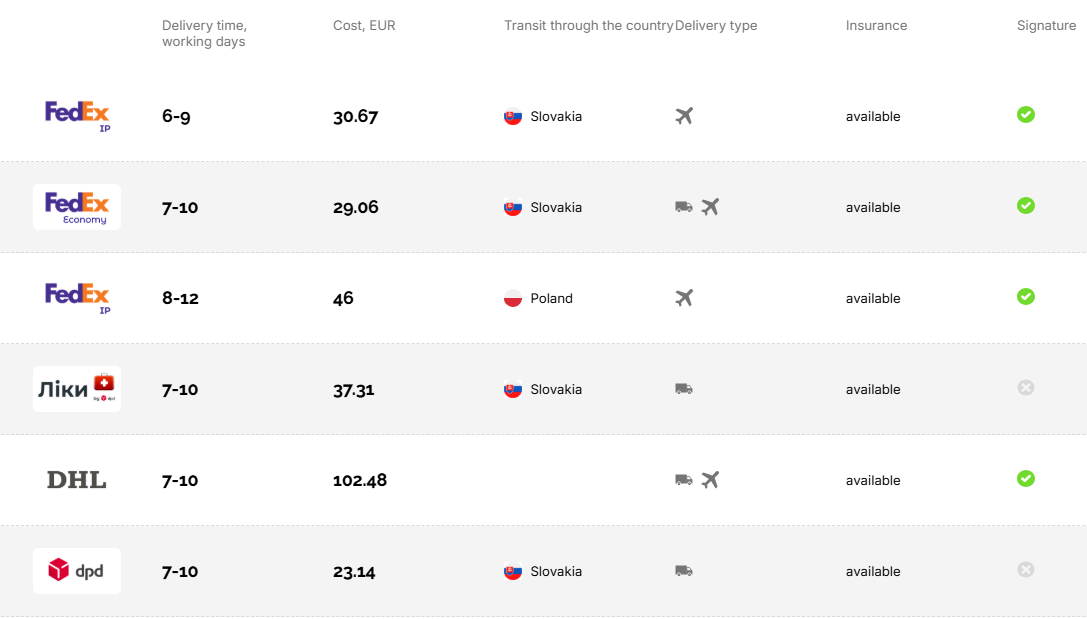
You’ll instantly see the cost of shipping with FedEx, DPD, or DHL — and can choose the most convenient option. Everything is transparent, with no hidden fees or unexpected costs.
Which Medicines Can Be Shipped from Ukraine to the EU
To avoid delays or a returned parcel, it’s important to know in advance which medications are allowed for shipping — and which are strictly prohibited.
1. Allowed for shipping (if rules are followed):
- Vitamins, antibiotics, supplements, and dietary additives;
- Over-the-counter medicines — painkillers, antipyretics, allergy medications, antiseptics, cold remedies, etc.
2. Not accepted for shipping:
- Prescription medications — even with a prescription. They are not allowed under GlobalPost services.
- Medicines containing narcotic or psychotropic substances (some strong painkillers, antidepressants, tranquilizers).
- Expired medications.
Recommendation from GlobalPost: Always check the ingredients before sending a medicine — especially the active substance. Information on banned components can be found on official customs or medical websites of the destination country. If in doubt — contact our team: we’ll help you verify a specific medicine.
Conclusion
Sending medicines to EU countries requires attention to detail: documents, packaging rules, and restrictions. But if everything is done correctly, the parcel will pass customs smoothly and without delays.
At GlobalPost, we assist at every stage — from verifying the medicine to handling documentation and delivery. We know the requirements of EU countries and work to ensure your loved ones receive the necessary medicines on time. Our approach is to minimize the client’s involvement in complex procedures and make the process as convenient and predictable as possible. You hand us the parcel — we take care of everything else!
Recent posts






Can I send medicines that require temperature control?
What to do if your parcel is held up by customs?
Are the rules the same in all EU countries?
Is it possible to send a year's supply of medication at once?
How can I find out the cost of shipping medicines to the EU?
Why should you order medicine delivery to EU countries through GlobalPost?
Recent posts


