

Volume weight vs. actual weight: How to avoid overpaying for shipping light but bulky items
Do you manufacture or ship lightweight but bulky goods? Then you’ve likely encountered an unpleasant surprise — the delivery cost is significantly higher than expected, even though the actual weight of the shipment is minimal. The reason is simple: logistics operators and airlines calculate shipping costs based on whichever is greater — the actual weight or the volumetric weight.
In this article, we clearly explain what volumetric weight is, how to calculate it correctly, and most importantly — we provide practical tips that will help your business significantly save on shipping by avoiding overpaying for air.
Actual Weight vs Volumetric Weight
- Actual weight refers to the real mass of your shipment as shown on the scale.
- Volumetric weight is a calculated measure that reflects the amount of space the parcel occupies in the transport vehicle.
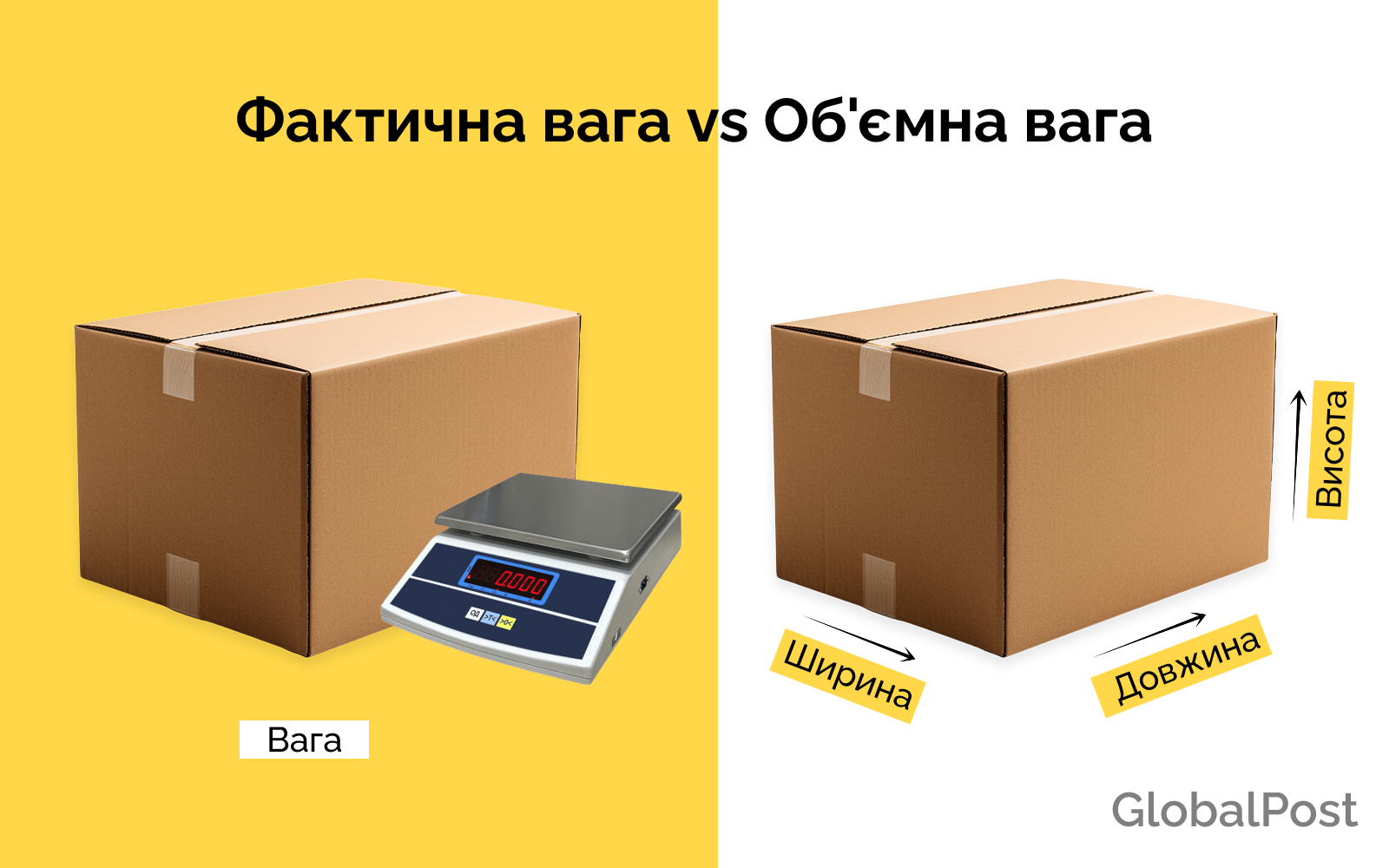
If a box takes up a lot of space but weighs very little, the carrier calculates the cost based on volumetric weight — because the key resource in transportation is not only kilograms, but also cubic centimeters in an aircraft or truck. To determine volumetric weight, you need to measure in centimeters all three maximum dimensions of the packaged shipment and use the following formula:
- (Length (cm) × width (cm) × height (cm)) / 5000 = volumetric weight (kg)
Example: Box size 60×40×30 cm.
(60 × 40 × 30) / 5000 = 14.4 kg
If the actual weight is 6 kg, the shipping rate will be calculated based on 14.4 kg.
Top 5 Practical Tips from GlobalPost to Save on Shipping
1. Use the right box size
Avoid shipping “air.” Don’t use an oversized box for a small product. Every extra centimeter in dimensions equals additional kilograms in volumetric weight.
2. Flatten (compress) your goods
This is crucial for clothing, textiles, fillers.
- Vacuum bags: using vacuum bags allows you to reduce package height by 2–3 times. Remember: height is the most important multiplier in the formula.
- Dense packing: make sure the packaging material fits tightly around the product, avoiding bulges and deformation.
This method works for international air shipments — the key is to ensure the packaging remains airtight and properly labeled to allow quick customs clearance.
3. Consolidate shipments
GlobalPost helps clients combine several small parcels into one batch — this can significantly reduce total delivery costs. Consolidation is especially beneficial for e-commerce and small businesses that ship regularly.
4. Use the right packaging shape
Long, awkward, or poorly folded boxes take up more space. If possible — adjust the orientation or switch to a more efficient shape (for example, flat packages instead of cubic ones).
5. Calculate the weight in advance
Don’t stress about volumetric weight. Simply enter the dimensions, and our calculator will show the final price — no surprises. Or submit a request on the website — our manager will contact you within 24 hours.
Conclusion
Volumetric weight is a reality of international logistics that cannot be ignored. But it is also an opportunity for your business to save. Choosing the right packaging materials, compressing items, and ensuring the box matches the product size can reduce your shipping costs by 10–30%.
GlobalPost always uses the most cost-effective rates for you and ensures full transparency in pricing. With us, you pay for your cargo — not for air!
Recent posts




Recent posts


